After undertaking construction or renovations, many homeowners and building managers focus on the aesthetics and functionality of their newly transformed spaces. However, one crucial aspect often overlooked is the cleanliness of the HVAC system and air ducts.
Why Clean Ducts After Construction?
If your home or commercial complex has recently undergone construction or renovation, it’s vital to prioritize the cleaning of air ducts and HVAC components. During construction activities, dust, debris, and other contaminants can accumulate within ductwork and HVAC systems, compromising indoor air quality and system performance. Failure to address these issues can lead to a range of problems, including poor indoor air quality, increased allergens, and reduced HVAC efficiency.
Official Standards for Cleaning and Restoration
The Institute of Inspection, Cleaning and Restoration Certification (IICRC) sets industry standards for the restoration and cleaning of various surfaces and materials. According to the IICRC-S500 standards, cleaning after water damage or construction activities must adhere to specific guidelines to ensure effective removal of contaminants and restoration of indoor environments.
Additionally, the National Air Duct Cleaners Association (NADCA) provides the ACR (Assessment, Cleaning, and Restoration) cleaning code, which outlines best practices for HVAC cleaning and maintenance. The ACR cleaning code emphasizes the importance of thorough cleaning to remove debris, contaminants, and microbial growth from ductwork and HVAC components.
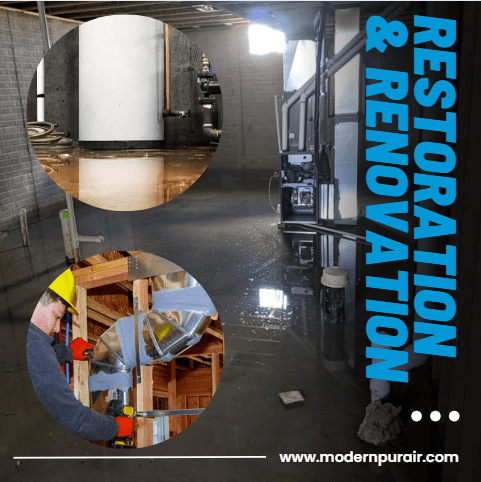
What To Do After Flooding and Water Damage
Section 10.4 of the NADCA ACR cleaning code addresses cleaning procedures following flooding or water damage, which can occur during construction or renovation projects. This section emphasizes the need for prompt and thorough cleaning of HVAC systems to prevent mold growth and microbial contamination.
Key guidelines outlined in Section 10.4 include:
- Inspection of HVAC components for water damage and contamination.
- Removal of standing water and moisture from ductwork and HVAC units.
- Cleaning and disinfection of affected surfaces to prevent microbial growth.
- Verification of system cleanliness through visual inspection and testing.
Following these guidelines helps ensure that HVAC systems are thoroughly cleaned and restored after water damage or construction-related moisture intrusion, safeguarding indoor air quality and occupant health.
Why Salvageable System Components Must Be Thoroughly Cleaned
According to the NADCA ACR 2006 standard, any HVAC system components or ducts deemed salvageable after construction or renovation must undergo thorough cleaning. This includes removing dust, debris, construction materials, and any other contaminants that may have accumulated during the construction process.
By adhering to the NADCA ACR 2006 standard, homeowners and building managers can ensure that their HVAC systems are free from post-construction debris and contaminants, promoting clean ducts and optimal indoor air quality.
In conclusion, proper cleaning is a critical step in ensuring healthy indoor air after construction projects. By following industry standards set by the IICRC and NADCA, homeowners and building managers can achieve peace of mind knowing that their HVAC systems are thoroughly cleaned and restored. Prioritizing post-construction cleaning not only improves indoor air quality but also extends the lifespan of HVAC equipment and promotes a healthier, happier living or working environment.