Indoor air quality plays a critical role in the health, comfort, and performance of any building. Because HVAC systems control how air moves, filters, and circulates through indoor spaces, HVAC air quality testing is one of the most effective ways to understand what occupants are actually breathing.
From residential homes to commercial buildings, HVAC system air quality testing helps identify pollutants, ventilation issues, and hidden sources of contamination, before they become larger health or operational problems.
This guide will help you explore the fundamentals of indoor air quality, why it’s increasingly essential for healthy indoor living, and how Modern PURAIR® can be your trusted authority in indoor air quality (IAQ) testing, emphasizing the necessity of thorough HVAC system monitoring and evaluations.
What Is HVAC Air Quality Testing?
Indoor air quality (IAQ) refers to the condition of air inside a building and how it affects occupant health. Factors such as ventilation design, air exchange rate, filtration, building materials, and HVAC system operation all influence air quality.
An HVAC air quality test is a structured assessment of indoor air conditions as they specifically relate to a building’s heating, ventilation, and air conditioning systems.
Organizations like the Environmental Protection Agency (EPA) and U.S. Green Building Council emphasize Indoor Environmental Quality as a core pillar of healthy building management.
What HVAC Air Quality Testing Evaluates
Comprehensive HVAC air quality testers are focused on several elements in a building’s environment that interact with its ventilation and heating system, along with the health of the system itself.
Most will look for:
- Airborne pollutants and indicator compounds
- Ventilation effectiveness and air exchange rate
- HVAC system performance and airflow
- Potential air pollution sources within the building
Why HVAC Air Quality Testing Matters for Health and Safety
Poor IAQ often goes unnoticed because many pollutants are invisible and odorless.
Health Symptoms Linked to Poor Air Quality
Exposure to indoor air pollutants can contribute to:
- Respiratory irritation
- Headaches and fatigue
- Allergy and asthma flare-ups
- Long-term health symptoms
Airborne irritants, airborne spores, and airborne particles can circulate continuously through ventilation systems if left unaddressed.
HVAC Systems as a Distribution Pathway
HVAC systems don’t create pollutants, but they can distribute them. Without testing, contaminants such as VOCs, mold spores, or particulate matter can spread throughout a building via air conditioning systems and ventilation fans.
Common Pollutants Identified Through HVAC Air Quality Tests
A professional IAQ test should help uncover both common and unexpected contaminants, primarily the following:
Particulate Matter and Airborne Pollutants
Particulate matter includes dust, fibers, and microscopic airborne particles. Elevated levels often indicate inadequate filtration, dirty HVAC components, or ongoing construction work.
Mold, Airborne Spores, and Moisture Issues
Mold growth is frequently linked to water damage, water leaks, or poor humidity control. Airborne spores can circulate through HVAC ductwork and cause persistent indoor air quality issues.
Chemical Pollutants and VOCs
Volatile organic compounds (VOCs) originate from:
- Building materials
- Repainting projects
- Cleaning products
- Petroleum products
Photoionization detectors are commonly used as VOC testing devices to measure their levels during IAQ tests.
Radon, Asbestos, CO2, Carbon Monoxide, and Legacy Contaminants
Radon gas, an odorless and colorless radioactive gas, is typically measured using a radon detector, especially in the lower levels of buildings where it tends to accumulate. It is crucial to monitor and mitigate to prevent long-term health risks.
Older buildings may contain asbestos, a hazardous material that, if disturbed during construction or renovation, can release fibers posing serious health risks. Proper testing and handling are essential for safety during any building modifications.
Carbon Dioxide (CO2) and Carbon Monoxide (CO) are crucial to monitor within indoor environments.
- Carbon Dioxide (CO2): Elevated CO2 levels can be an indicator of inadequate ventilation. A CO2 monitor can help ensure levels remain within a safe range, promoting comfort and cognitive function.
- Carbon Monoxide (CO): This colorless, odorless gas originates from incomplete combustion in appliances and engines. CO detectors are vital for early detection, as exposure can lead to severe health effects, including poisoning.
Testing for these gases as part of a comprehensive IAQ assessment is essential for maintaining a safe and healthy indoor environment.
Signs Your HVAC System Needs IAQ Testing
Certain warning signs indicate that air quality testing may be needed.
Common indicators include:
- Persistent odors or stale air
- Visible mold or moisture staining
- Increased allergy symptoms
- Poor ventilation or stuffy rooms
- Recent construction work or repainting
- Known water damage or leaks
How HVAC Air Quality Testing Is Performed
Professional HVAC air quality testing follows a structured process to ensure accurate results.
Inspection and System Assessment
The process begins with a detailed inspection of the HVAC system, ventilation systems, air filters, and building design features that influence airflow and contaminant movement.
Indoor Air Sampling and Monitoring
Indoor Air Sampling is conducted at multiple sampling locations using calibrated air quality monitors. Tests may measure:
- Particulate matter
- VOCs
- Mold spores
- Carbon-based indicator compounds
In some cases, samples are sent for laboratory analysis, including ELAP certification testing when required.
Environmental and Operational Factors
Testing considers:
- Occupancy patterns
- Ventilation rates
- Air exchange rate
- Building usage and layout
Interpreting and Acting on Indoor Air Quality (IAQ) Indicators
Results help identify:
- Elevated pollutant levels
- Source locations
- HVAC system inefficiencies
Industry references such as the ASHRAE Journal and IAQ standards help benchmark findings.
Once issues are identified, mitigation strategies can be prioritized based on risk, severity, and building use.
Strategies to Improve HVAC System Air Quality
Testing provides the foundation for improvement.
Filtration Upgrades and Maintenance
Upgrading to higher-efficiency filters such as MERV 13 or a HEPA filter can significantly reduce airborne pollutants. Proper air filter selection must align with HVAC system capacity.
Ventilation and Airflow Improvements
Improving ventilation systems, adjusting air exchange rates on air purifiers or HVAC systems, and performing testing and balancing can enhance fresh air delivery and pollutant dilution.
Moisture Control and Mold Mitigation
Addressing water leaks, condensation, and humidity issues is critical to preventing mold growth. Mitigation strategies often combine HVAC adjustments with building repairs.
Residential vs. Commercial HVAC Air Quality Testing
Testing approaches vary based on building type.
- Residential Considerations: In homes, testing focuses on comfort, health symptoms, and lifestyle factors such as pets, pest droppings, renovations, or new furnishings.
- Commercial and Institutional Buildings: Commercial buildings require broader assessments tied to building management, OSHA guidance, and Indoor Environmental Quality goals.
Why Professional HVAC Air Quality Testing Matters
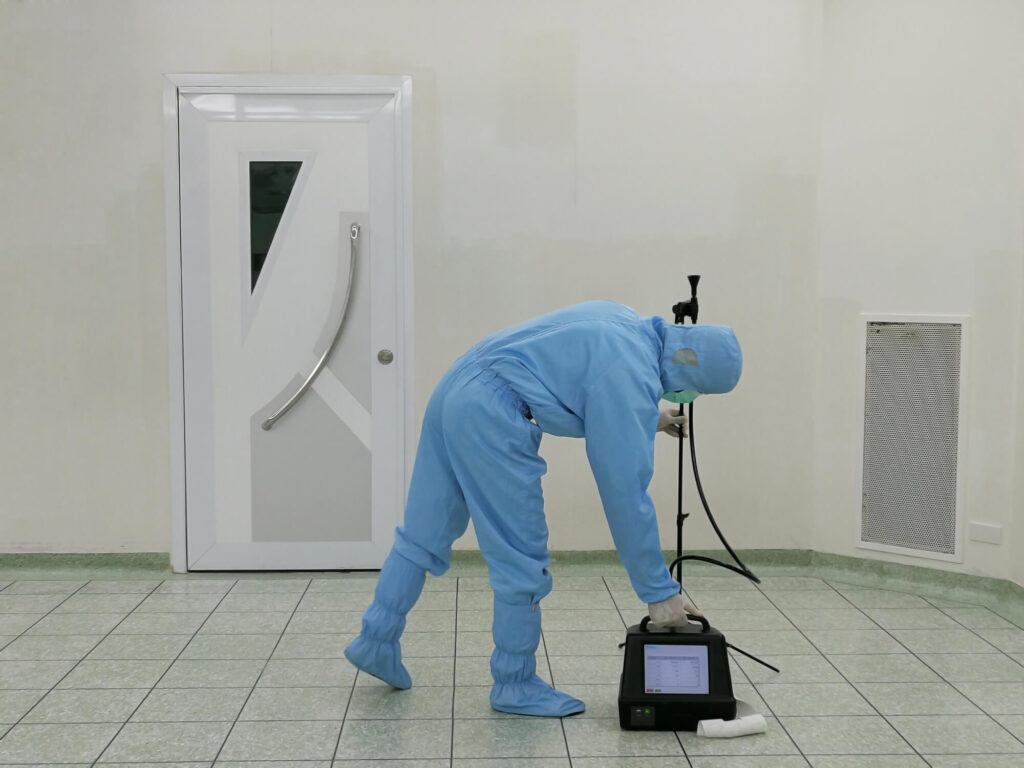
HVAC IAQ testing is most effective when it’s performed by trained professionals who understand both indoor air science and HVAC system design. While consumer-grade air quality monitors can provide limited insights, they often fail to identify root causes or accurately interpret results within the context of a building’s ventilation and airflow patterns.
Professional HVAC air quality testing matters because it provides:
- Accurate sampling and testing protocols: Professionals follow established Indoor Air Sampling methods, selecting appropriate sampling locations and testing durations to capture meaningful data. This reduces the risk of false positives or misleading results.
- Advanced detection tools and analysis: Certified technicians use calibrated equipment such as photoionization detectors, particulate matter sensors, and radon detectors. When needed, samples are sent for laboratory analysis, including ELAP certification testing, to confirm the presence of mold spores, VOCs, or other pollutants.
- System-level insight, not just readings: Professional assessments evaluate how air pollution particles interact with HVAC systems, ventilation systems, air exchange rates, and building design. This system-wide view is essential for identifying whether issues stem from filtration, airflow, moisture, or external sources.
- Actionable recommendations and mitigation strategies: Rather than just reporting numbers, professionals translate results into practical methods for improvement, such as filtration upgrades, ventilation adjustments, flush-out procedures, or targeted mitigation strategies aligned with IAQ standards.
Professional testing ensures results are accurate, contextual, and useful, supporting informed decisions that improve indoor air quality and protect occupant health.
Why Choose Modern PURAIR® for HVAC Air Quality Testing
Modern PURAIR® brings a comprehensive, HVAC-focused approach to air quality testing that goes beyond basic measurements. Our assessments are designed to uncover not just what pollutants are present, but why they’re there and how they can be effectively addressed.
What sets Modern PURAIR® apart includes:
- HVAC-centered testing expertise: We evaluate IAQ in direct relation to HVAC system performance, ventilation design, filtration efficiency, and airflow dynamics, providing a clearer picture of how air moves and where pollutants originate.
- Comprehensive pollutant detection: Our testing identifies a wide range of concerns, including particulate matter, VOCs, mold spores, airborne irritants, radon, and indicator compounds associated with building materials, water damage, or construction activity.
- Clear reporting with practical next steps: Results are translated into easy-to-understand reports with prioritized recommendations. Whether the solution involves air filters, MERV 13 upgrades, HEPA filtration, ventilation improvements, or moisture control, we focus on realistic, effective mitigation strategies.
- Long-term air quality management support: Modern PURAIR® helps customers move beyond one-time testing by supporting ongoing Indoor Environmental Quality goals through system optimization, maintenance planning, and air quality improvement strategies.
Our goal is to help customers achieve measurable, lasting improvements in indoor air quality, safely, efficiently, and with confidence.
HVAC Air Quality Testing Is the Foundation of Healthy Buildings
HVAC air quality testing provides the insight needed to identify pollutants, assess ventilation effectiveness, and develop informed strategies that protect both people and property.
Whether you’re responding to health symptoms, addressing water damage, planning renovations, or simply taking a proactive approach to building management, professional testing delivers clarity and direction. With accurate data and expert interpretation, air quality issues can be addressed at their source, before they escalate.
If you’re ready to better understand your indoor air and improve the performance of your HVAC system, call us today. Modern PURAIR® provides professional HVAC air-quality testing, expert assessment, and clear recommendations tailored to your building and needs.
Request your assessment today, and take the first step toward cleaner, healthier indoor air.