Dust that won’t quit, rooms that never feel quite right, or mystery odors every time the HVAC system starts, when your ducts are involved, it’s easy to assume they “just need a good cleaning.”
Sometimes that’s true. Just as often, though, the real culprit isn’t what’s inside your ducts, but what’s leaking out of them, or where replacement air is being pulled from.
The basic difference between air duct sealing vs duct cleaning is simple: duct sealing addresses leaks and gaps in ductwork, while air duct cleaning removes accumulated dust, debris, and other material from inside the system.
Both services can be useful, but they solve different problems. Understanding the symptoms and having the duct system properly assessed can help homeowners choose the service their home actually needs.
Duct Sealing vs. Duct Cleaning: What’s the Difference?
Every time your HVAC system runs, air moves through a network of supply and return ducts. In many homes, some of that ductwork passes through attics, crawlspaces, garages, unfinished basements, or other areas outside the conditioned living space.
If it’s a case of leaky ducts, heated or cooled air can escape before reaching your rooms. If the ducts contain significant dust, construction debris, pet hair or dander, or other unwanted material, cleaning may be appropriate.
Here’s the basic comparison:
| Service | What It Does | Best Suited For | What It Doesn’t Fix |
| Duct sealing | Closes leaks and gaps in ductwork | Air leakage, uneven airflow, energy waste | Existing dust or debris inside ducts |
| Duct cleaning | Removes accumulated material from the system | Dust buildup, construction debris, and certain contamination events | Leaks, gaps, or poor duct design |
| Both | Addresses leakage and cleanliness | Systems where inspection identifies both problems | Ongoing moisture, pest, or other source problems |
Think of sealing as addressing where air is going, while cleaning addresses what has accumulated inside the system.
What Is Air Duct Sealing?
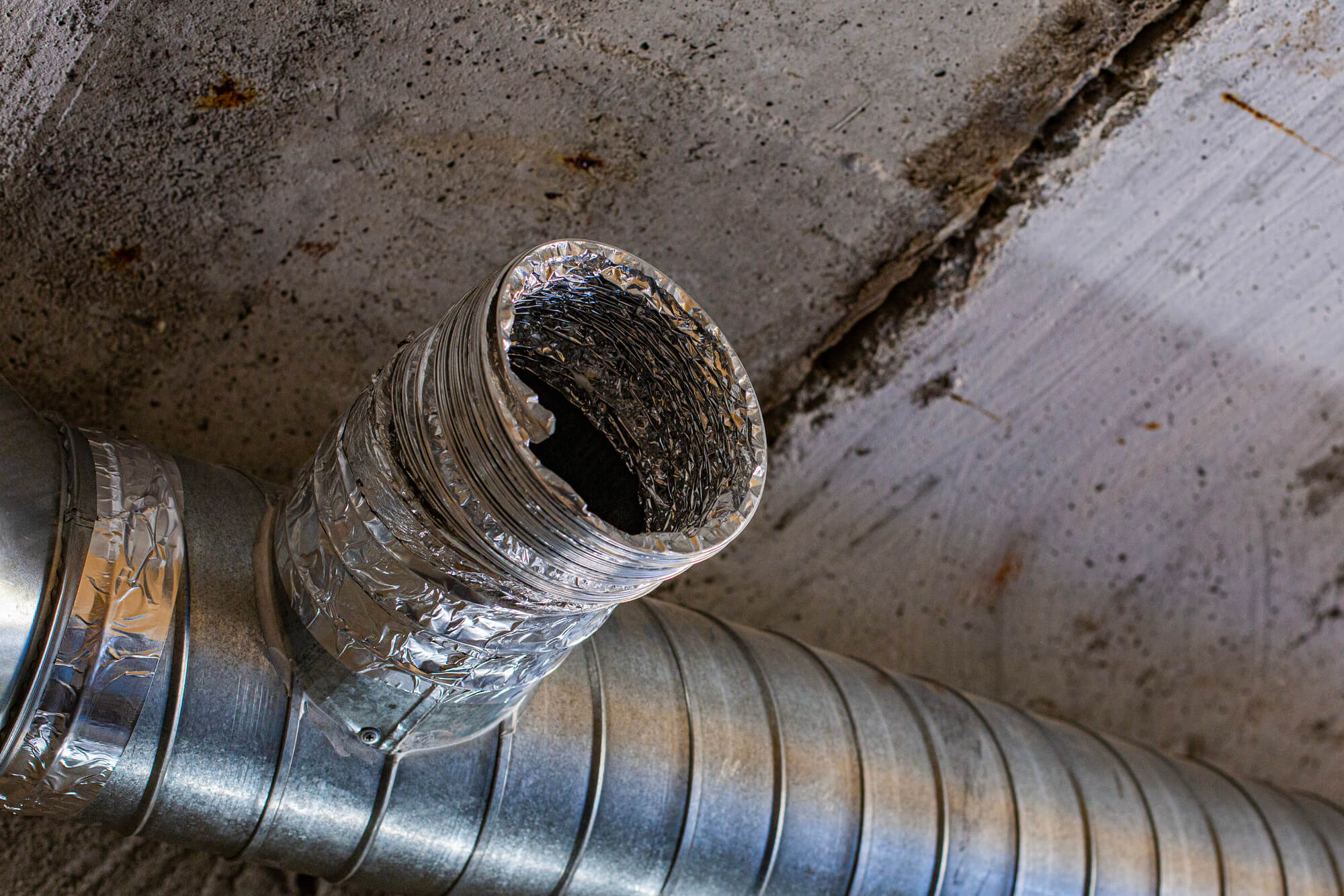
Over time, duct joints can loosen, tape can deteriorate, and flexible ductwork can become damaged or disconnected. These gaps allow conditioned air to escape into spaces where it doesn’t help keep your home comfortable.
Leaks in return ductwork may also allow air to enter the system from surrounding spaces.
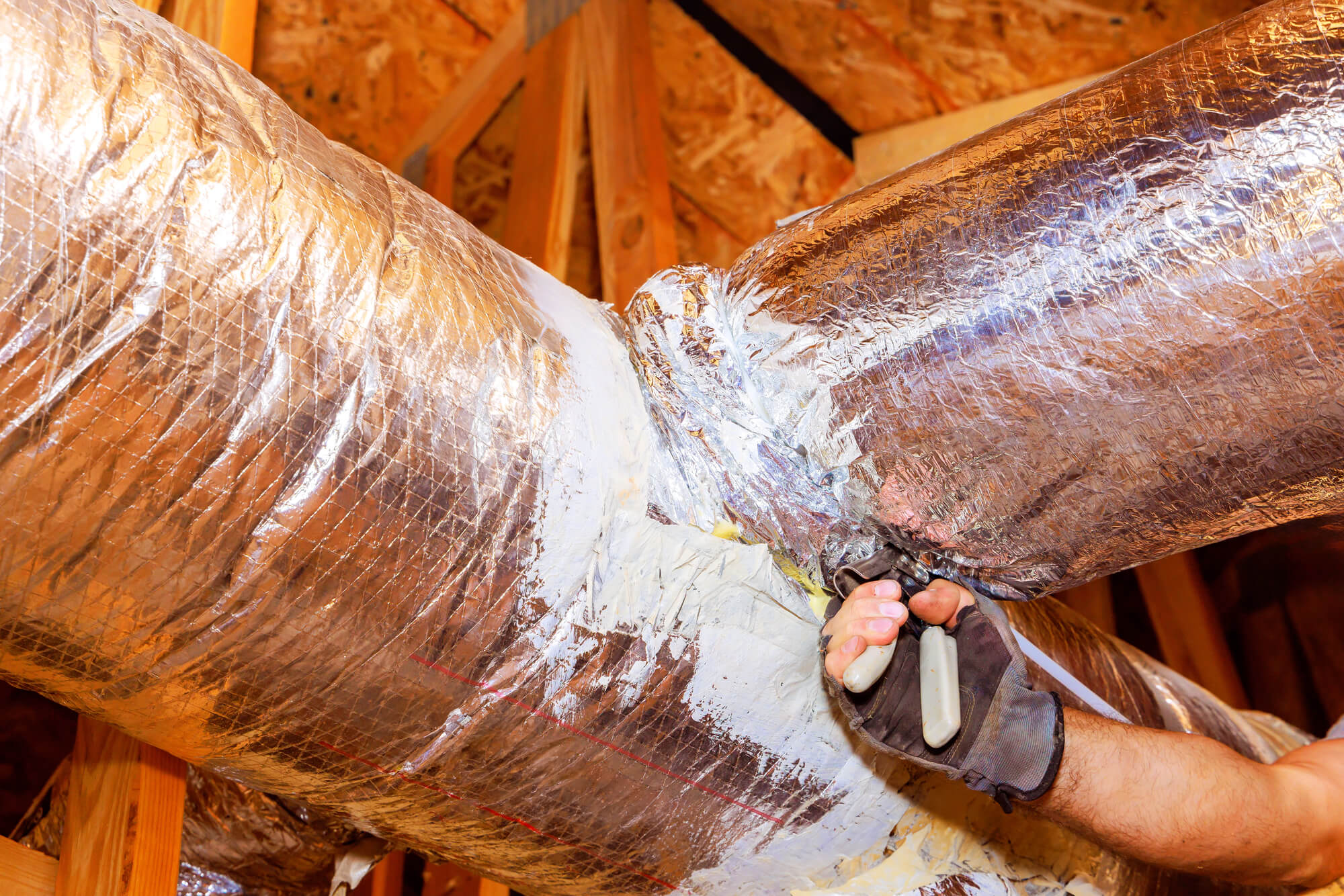
Traditional duct sealing typically involves applying mastic sealant or appropriately rated foil tape to accessible seams, joints, and connections.
Other approaches may use air duct sealants, which mostly come in the form of aerosol-based sealing products, to address certain leaks from inside the system.
Properly addressing leaky ducts can reduce unwanted air leakage and may improve delivered airflow, HVAC system performance, and ultimately improve energy efficiency, which lowers your utility bills.
However, sealing doesn’t remove existing dust or debris, and it won’t correct every airflow problem if duct sizing, damage, or system design is also involved.
What Is Air Duct Cleaning?
Air duct cleaning is a different kind of service.
A professional HVAC system cleaning involves more than vacuuming the vent covers or registers you can see.
A whole-system approach may place the ductwork under negative pressure while specialized tools loosen accumulated material so vacuum equipment can collect and contain it.
An air duct deep cleaning may become more relevant when inspection identifies conditions such as:
- Significant dust or debris inside the ductwork
- Construction debris following a home renovation
- Material visibly coming from registers
- Smoke or soot contamination
- Confirmed pest activity involving the duct system
- Appropriately identified mold growth or microbial contamination involving HVAC components
Cleaning removes existing material. It doesn’t seal duct leaks, repair damaged ductwork, or correct an ongoing moisture or contamination source.
How To Know If Your Ducts Need Sealing or Cleaning
The symptoms you notice around your home can provide useful clues, but they aren’t always enough to diagnose the problem on their own.
Signs Your Home May Need Air Duct Sealing
Duct sealing moves higher on the list when comfort and HVAC performance are the main concerns.
Possible signs include:
- Rooms that consistently stay warmer or cooler than others
- Noticeably weak airflow from certain supply registers
- An HVAC system that seems to run longer than expected
- Unexplained changes in heating or cooling energy bills
- Visible gaps, damaged connections, or disconnected accessible ductwork
- Ducts running through attics, crawlspaces, garages, or other unconditioned spaces
Leakage in these areas matters because the air you’ve already paid to heat or cool may be escaping before it reaches the intended rooms.
The impact of conditioned air escaping varies from home to home depending on the amount and location of leakage, insulation, climate zone, duct design, and the building envelope.
Signs Your Home May Need Air Duct Cleaning
Cleaning becomes more relevant when the primary problem is material inside the HVAC system.
That could include substantial dust buildup, rust from older corroded ductwork, debris left behind after construction or renovation, smoke residue, or material blowing from registers.
Confirmed pest activity can also leave unwanted material in ductwork. Pest problems should be resolved at the source before or alongside any appropriate cleaning.
The same principle applies to mold. If microbial growth is identified, simply cleaning the ductwork isn’t a complete solution. The moisture conditions or other sources that allowed the problem to develop also need to be addressed.
When Your Home May Need Both
Sometimes sealing and cleaning address two parts of the same problem.
For example, imagine a leaky return duct running through a dusty crawlspace.
If unwanted material has entered the HVAC system through leakage, cleaning may remove existing debris, while an air duct sealing addresses the pathway that contributed to the problem.
- Cleaning without addressing the source could leave the underlying issue unresolved.
- Sealing without removing substantial existing contamination won’t remove what’s already there.
That’s why identifying the cause matters more than automatically choosing one service.
Which Should Come First: Duct Cleaning or Duct Sealing?
There isn’t one correct order for every home. The right sequence depends on what the inspection finds.
A sensible process may look like this:
- Address active source problems first: Moisture intrusion, pest activity, or other ongoing problems should be corrected rather than covered up.
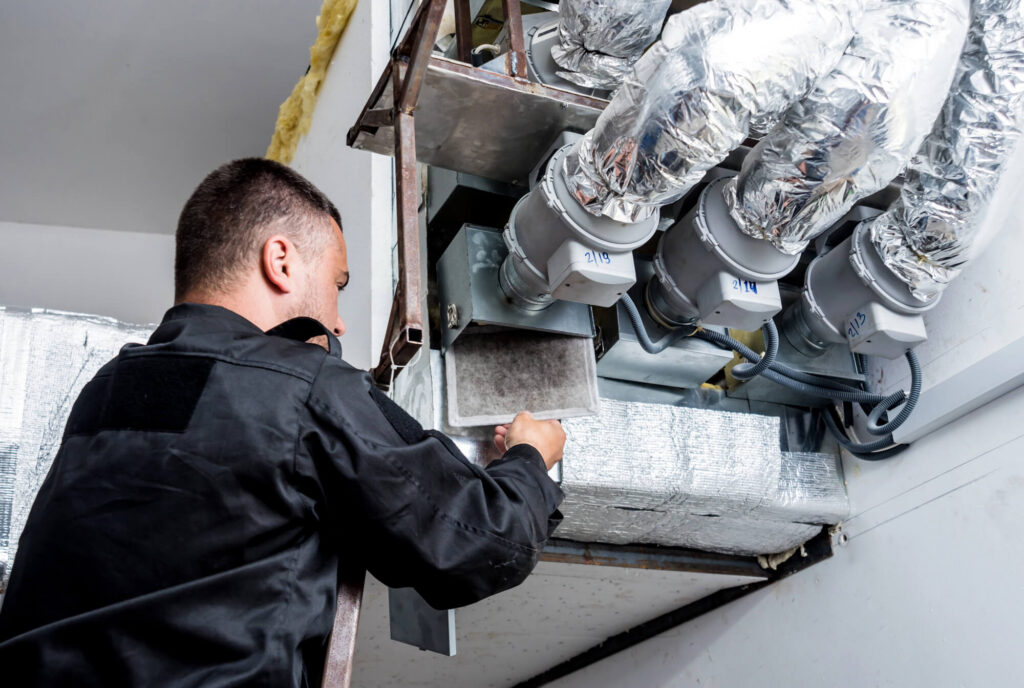
- Inspect the ductwork and HVAC system: Look for leakage, damage, restrictions, debris, and other relevant conditions.
- Assess leakage and airflow where appropriate: Pressure readings, airflow measurements, or a pressure test can provide useful information in some situations.
- Complete the necessary cleaning, repairs, or sealing: The order should match the conditions identified in the system.
- Verify the result: Depending on the work completed, that may mean checking cleanliness, airflow, or leakage reduction.
The objective isn’t to clean first or seal first simply because that’s a standard sequence. It’s to solve the actual problems in the appropriate order.
Does Duct Sealing Save Energy?
Air duct sealing can help result in energy savings when heated or cooled air is escaping through leaks, particularly when ductwork travels through an attic, garage, crawlspace, or another unconditioned area.
Reducing that leakage means more conditioned air can reach the areas it was intended to serve instead of being lost along the way.
However, the potential energy savings vary considerably between homes. Results depend on factors such as the severity and location of duct leakage, HVAC system performance, duct design, insulation, building envelope, climate, and existing airflow balance.
That’s why inspection and testing are more useful than assuming sealing will produce a specific reduction in energy bills.
Does Air Duct Cleaning Improve Indoor Air Quality?
Professional duct cleaning removes accumulated material from inside air ducts and applicable HVAC components. When a system contains substantial dust, construction debris, smoke residue, mold, pet hair, or other identified contaminants, removing that material may be one part of improving the home’s indoor environment.
But indoor air quality depends on much more than duct cleanliness.
Filtration, humidity and moisture control, ventilation, HVAC maintenance, duct leakage, and sources of contaminants inside and outside the home can all play a role.
Duct cleaning should therefore be matched to an actual need rather than treated as a cure-all for dust, seasonal allergies, mold, or other indoor air quality concerns.
Why a Professional Inspection Matters Before Choosing Either Service
There is only so far homeowners can go by looking at a dusty register or noticing that one bedroom feels warmer than another.
A professional assessment can help distinguish symptoms from their underlying causes.
Depending on the home and HVAC system, an assessment may include:
- Visual inspection of accessible ductwork and HVAC components
- Checking for damaged or disconnected ducts
- Looking for significant dust or debris accumulation
- Airflow observations or readings at supply and return registers
- Pressure readings or duct leakage testing, where appropriate
- Identifying whether moisture, pests, or another problem source needs attention first
This is important because a symptom isn’t a diagnosis.
Dust in the home doesn’t automatically mean the ducts need cleaning. Higher energy bills don’t automatically mean air duct sealing is the answer. Weak airflow could involve duct leakage, restrictions, system design, filtration, or an HVAC equipment issue.
A good assessment helps determine which problem you’re actually trying to solve before money is spent solving it.
Choose the Duct Service That Solves the Actual Problem
Air duct sealing and HVAC duct cleaning are tools, not goals.
Duct cleaning removes accumulated material from inside the air ducts.
Duct sealing addresses duct leaks, the unwanted pathways where air can escape or enter, often by applying duct mastic at joints and seams.
Some homes may benefit from one, some may need both, and others may require duct repair, a different HVAC system solution, or a building-envelope fix. Significant duct leakage can hurt energy efficiency, while heavy buildup can restrict airflow through the duct system.
Modern PURAIR® can help homeowners better understand what’s happening inside their HVAC ductwork and determine whether professional air duct cleaning is appropriate.
The best next step isn’t guessing between cleaning and sealing. It’s identifying the problem in your duct work first and choosing the service that actually addresses it.