
If you share your home with pets, you don’t just have a furry friend; you’re also inviting an invisible world of airborne particles, allergens, and odors into your space.
Pet ownership can significantly impact your indoor air quality (IAQ), affecting not only your comfort but also your health and the performance of your HVAC system.
For pet owners, especially those dealing with allergies, asthma, or chronic respiratory conditions like COPD, understanding how pets influence air quality is essential. This guide explores the hidden air quality challenges that come with pet ownership and introduces you to modern solutions — including air purification systems, MERV and HEPA filters, and Modern PURAIR®’s own advanced technologies — that help you breathe cleaner, safer air.
How Pets Impact Indoor Air Quality
Pets bring joy and companionship into our homes, but they also contribute to various indoor air quality challenges. From shedding fur and dander to tracking in outdoor pollutants, pets can significantly alter the air we breathe. Understanding these impacts is crucial for maintaining a healthy home environment.
Pet Dander and Allergens
Pet dander, a microscopic mix of skin flakes, dried saliva, and urine proteins, is one of the most common indoor allergens. Unlike pet fur, which is visible, dander is ultra-light and can remain suspended in the air for extended periods, penetrating deep into upholstery, carpets, and HVAC systems.
This becomes a major problem for people with pet allergies or sensitive respiratory systems. Dander particles are roughly 2.5 microns in size — small enough to bypass nasal defenses and lodge in the lungs, triggering asthma attacks, allergic reactions, or worsening chronic conditions like COPD.
Pet Odors and Volatile Compounds
From litter boxes to wet fur, pets introduce a spectrum of unpleasant smells into the home. These odors often stem from VOCs (volatile organic compounds) released by biological processes and pet-related products, such as shampoos, sprays, and cleaning agents.
Organic matter, such as fur oils and saliva, releases compounds that traditional air fresheners can only mask. In multi-cat households or homes with dogs that spend a lot of time inside, the accumulation of these airborne pollutants can affect your home’s overall air smell and create persistent, hard-to-eliminate odors and future respiratory issues.
Pet Hair and Air Circulation
While pet fur isn’t an allergen by itself, it acts as a carrier for dander, dust, bacteria, and outdoor pollutants. These particles attach to hair, which then gets drawn into your HVAC system, clogging filters and reducing system efficiency.
Over time, pet hair buildup can lead to blocked vents, reduced airflow, and uneven temperature regulation. Even worse, clogged filters force HVAC systems to work harder, leading to higher energy bills and reduced equipment lifespan.
The Science Behind Air Purification for Pets
What Air Purifiers Actually Do
Air purifiers work by drawing in indoor air, capturing harmful particles, and recirculating cleaner air. Depending on the technology, they can neutralize odors, trap airborne pollutants, and eliminate pathogens.
Key terms to know:
- HEPA filter: Captures 99.97% of particles as small as 0.3 microns
- Activated carbon filter: Adsorbs odors, VOCs, fumes and gases
- Pre-filter: Catches large particles like fur and dust, extending HEPA filter life
- CADR (Clean Air Delivery Rate): Measures how quickly a purifier filters air
- Air quality sensor: Adjusts purifier speed based on pollutant levels
- Ozone/ionizer: Adds charged particles to air (but may produce harmful ozone if misused)
MERV and HEPA Filters: Capturing Pet Dander and Hair
HEPA (High-Efficiency Particulate Air) filters are essential for homes with pets. These filters are designed to remove microscopic particles like pet dander, pollen, and even smoke. When combined with a pre-filter, they also trap larger particles such as pet hair.
In HVAC systems, MERV-rated air filters (Minimum Efficiency Reporting Value) perform a similar role. A MERV rating of 11 or higher is ideal for capturing pet-related allergens.
However, frequent air filter replacement is key to maintaining effectiveness.
Activated Carbon Filters: Neutralizing Pet Odors
Unlike HEPA filters, which capture solids, activated carbon filters use adsorption to trap gaseous pollutants. This makes them excellent for removing pet odors, VOCs from litter boxes, and chemical residues from pet grooming products.
High-quality air purifiers often combine HEPA particle filters and activated carbon filtration to provide dual protection. Look for models that meet independent testing standards (e.g., AHAM, Energy Star) and are recommended in Consumer Reports, several Reddit pet forums, or by veterinarians.
Ionizers and Ozone Risks
Some air purifiers include ionizing features or UV light to kill bacteria and viruses. While UV-C light is effective for sterilization, poorly designed ionizers can produce ozone, which acts like a respiratory irritant that aggravates asthma and COPD.
Always choose systems that are certified ozone-safe or opt for duct-based UV purification like those used by Modern PURAIR®.
Features to Look For in an Air Purifier for Pet Owners
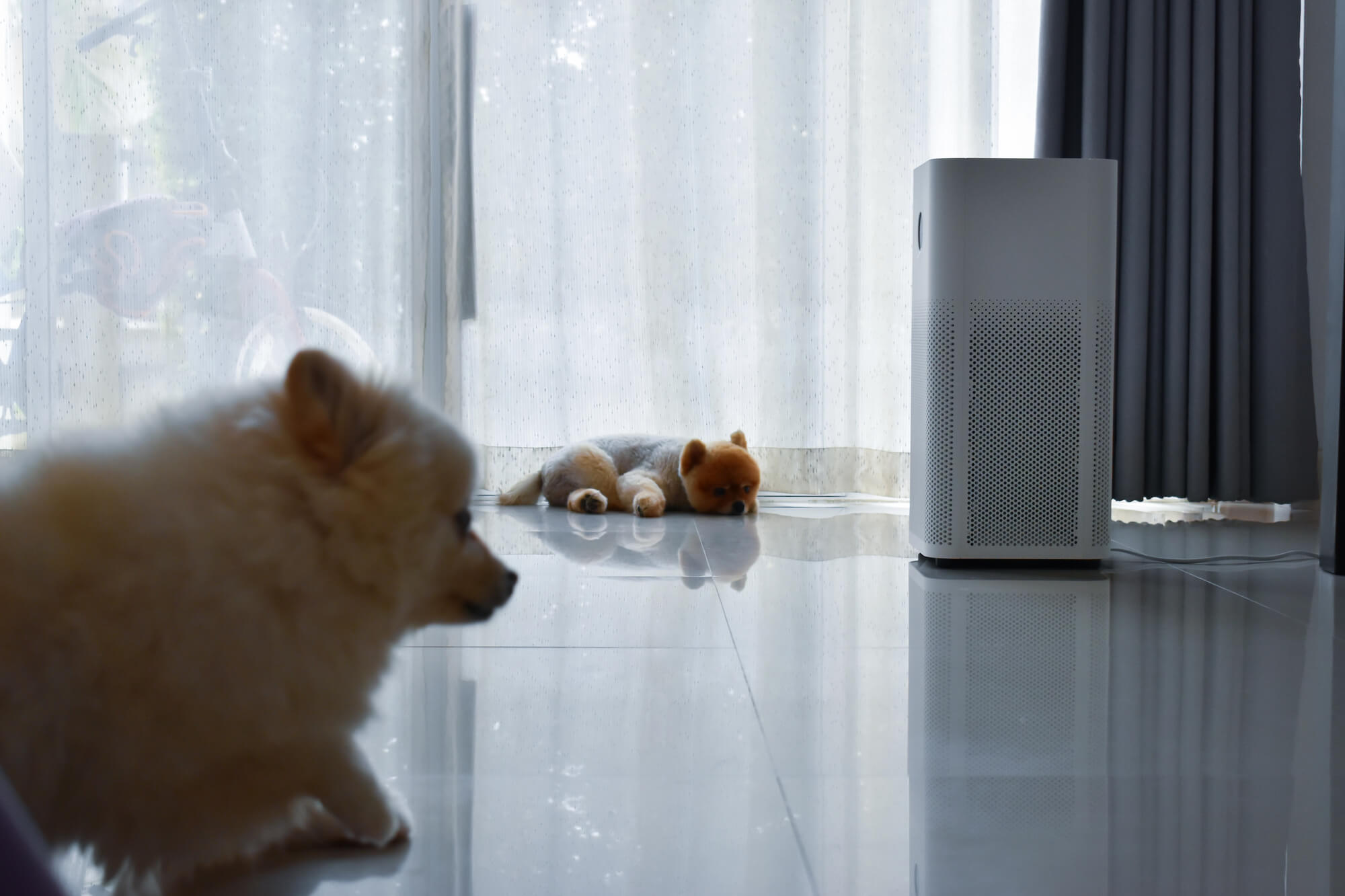
When selecting an air purifier for a home with pets, it’s important to consider certain features that will effectively address common pet-related air quality issues. From removing allergens to neutralizing odors with activated carbon, the right purifier can make your home a healthier and more pleasant environment for both you and your furry friends.
Top Technical Specs
- High CADR suited for most room sizes
- HEPA + activated carbon dual-filter systems
- Smart features like air quality indicators, remote control, and auto mode
- Multiple fan speeds for flexible performance
Low-Maintenance and Quiet Options
Pet homes require purifiers that are quiet, durable, and easy to clean. Features to prioritize:
- Washable pre-filters
- Quiet sleep mode or noise levels under 50dB
- App-based filter replacement alerts
What to Avoid
- Purifiers without HEPA or carbon filters
- “Ozone-enhanced” claims
- Units with weak CADR ratings for large rooms or multi-pet homes
- Weak or single fan speed settings that won’t offer much room coverage
How Pets Affect Your HVAC System
Pets bring joy and companionship, but they also impact the efficiency and lifespan of your HVAC system. Cat hair, dog fur, pet dander, dust bunnies, and pet allergens can clog filters, decrease air quality, and increase the frequency of maintenance needs — and for homes with multiple pets or residents with allergies and respiratory conditions, the right air purifier and HVAC maintenance program can make a measurable difference in daily comfort and long-term system performance.
Air Filter Clogging and Reduced Efficiency
Pet hair and dander clog HVAC filters faster than in pet-free homes. Cat hair and fine pet allergens pass through most air purifiers and standard filters that lack true HEPA filtration technology, reducing airflow, increasing energy use, and diminishing your HVAC system’s performance. Most air purifiers designed for pet owners use a three-stage filtration system — a pre-filter for large particles like cat hair and dust bunnies, a main particle filter or true HEPA filter for fine pet allergens and dander, and an activated carbon layer for odors — because a single main filter alone cannot adequately address the full range of contaminants that home pets introduce into the air. A three-stage filtration system is ideal for pet owners and the most effective approach to particle filtration in households with cats, dogs, or multiple animals.
Increased Wear and Tear
Overloaded filters and internal components stressed by pet hair, cat hair, and debris from home pets lead to premature wear. This can mean costly repairs or even full system replacement — and users should check the replacement costs of filters for air purifiers and HVAC systems regularly, since high quality particle filter replacements are an ongoing cost that should be factored into the total investment when evaluating any air purifier for pet owners or HVAC maintenance program.
Air Circulation and Allergen Spread
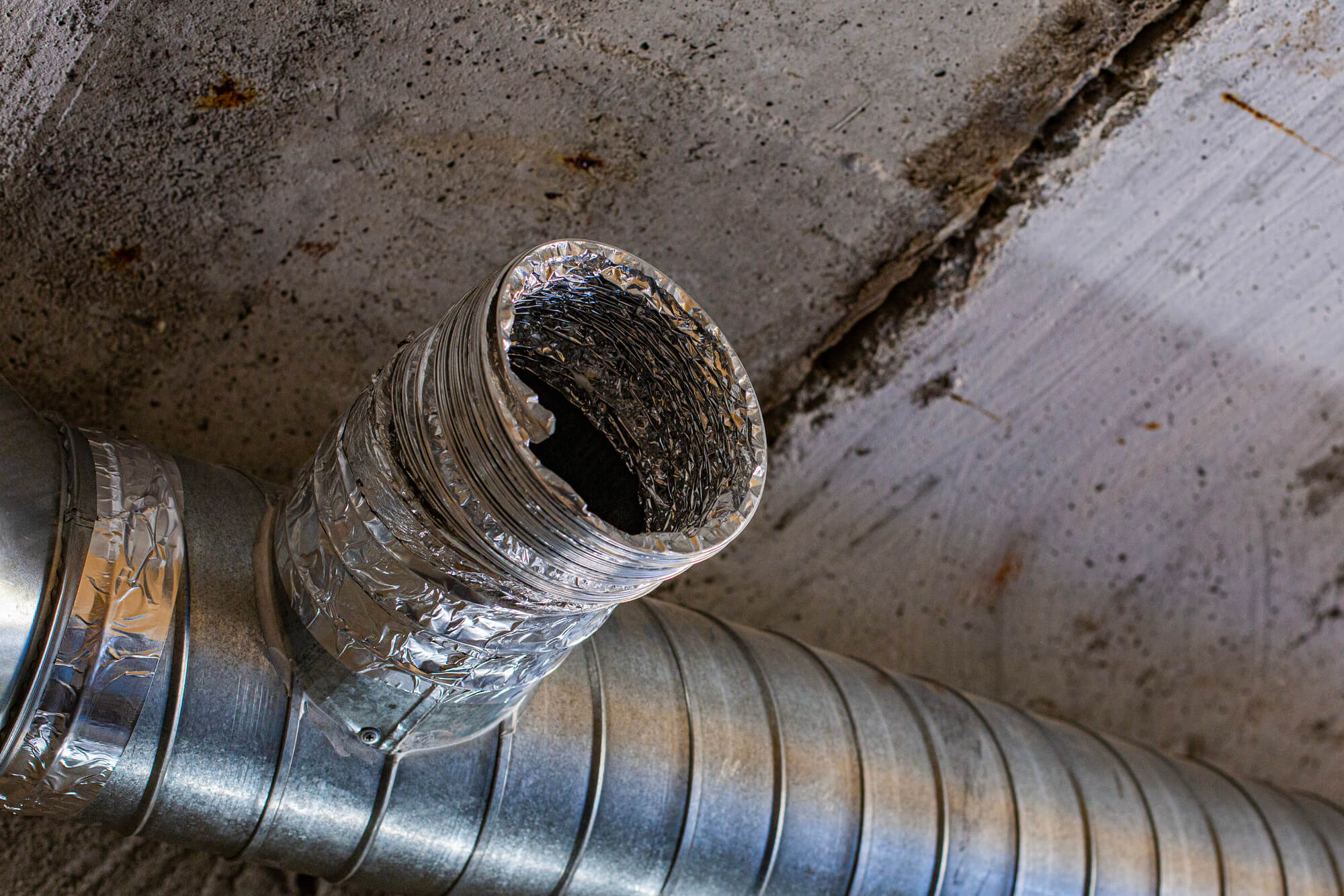
Your ductwork acts like a delivery system for pet allergens and odors. Without cleaning, pet-related contaminants including fine dander, cat hair, dust bunnies, and microbial particles circulate continuously through large spaces and smaller rooms alike — affecting every room and increasing the risks for those with pet allergies. Air purifiers improve indoor air quality by trapping pet allergens and neutralizing odors, but they work best when combined with clean ductwork rather than fighting against a contaminated HVAC system that continuously reintroduces pet allergens into the air supply. Air purifiers should ideally employ a combination of true HEPA filtration, pre-filters, and activated carbon filters — and air purifiers with low-level air intake are more effective at capturing pet hair and dander that settles close to the floor in homes with cats and dogs.
Modern PURAIR’s Air Quality Solutions for Pet Owners
Comprehensive Services for Pet-Friendly Homes
Modern PURAIR offers a full suite of indoor air quality services tailored to pet owners dealing with cat hair, pet allergens, dust bunnies, and the kind of persistent odors that standard filtration technology cannot fully address:
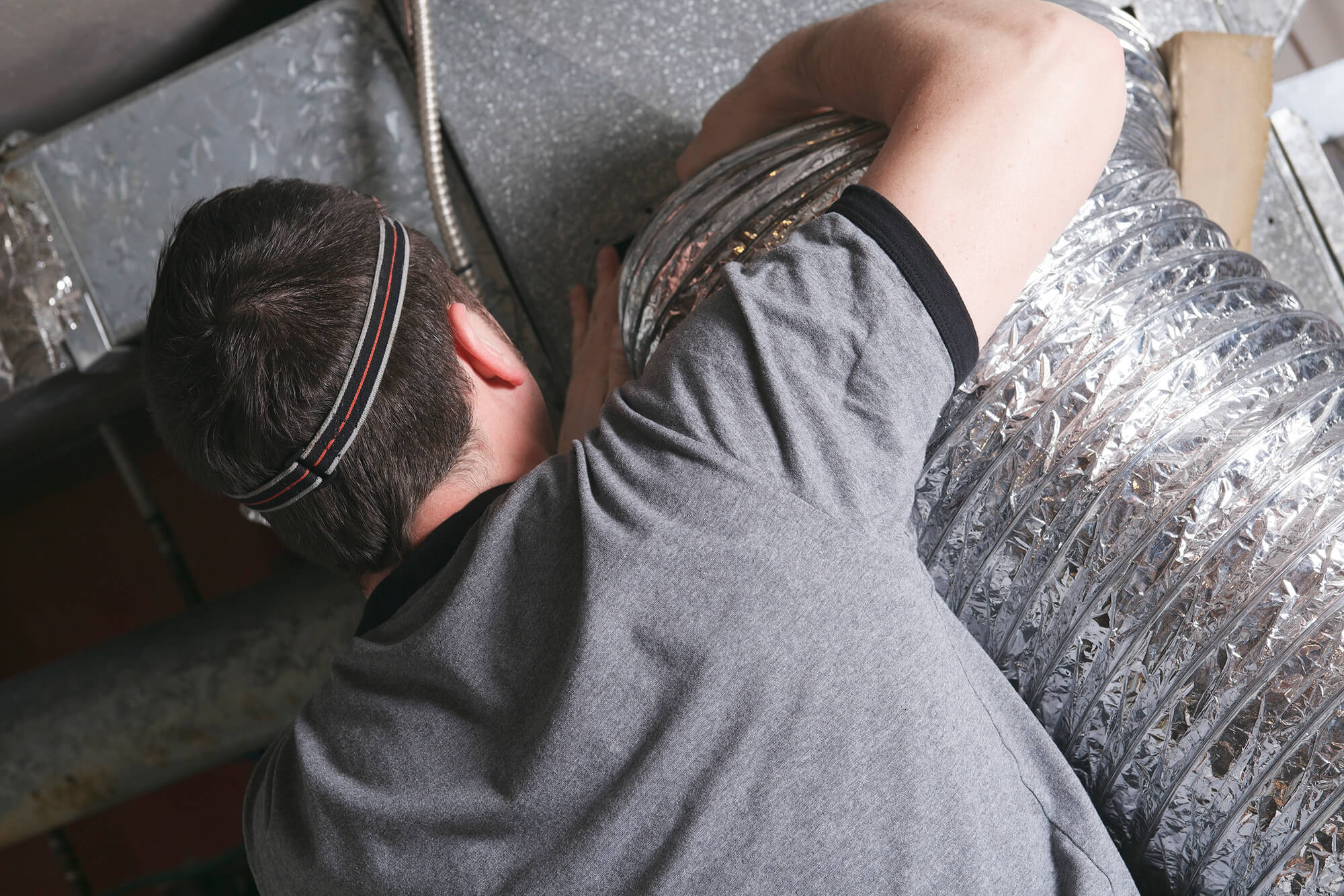
- Air duct cleaning to remove pet fur, cat hair, dander, and other debris from large spaces and the ductwork that connects every room in the home
- Furnace and vent cleaning to restore airflow that pet hair and pet allergens have compromised over time
- Filter maintenance programs with MERV-rated and true HEPA filter options for consistent HVAC performance — including guidance on replacement costs of filters to keep maintenance budgets predictable
Modern PURAIR’s Germicidal UVC Systems for In-Duct Air Sterilization
Our Germicidal UVC systems integrate directly into your HVAC system, targeting bacteria, viruses, mold spores, and pet-related microbes at the source. When sterilizing the air inside the ducts, the system reduces airborne pet allergens and pollutants before they reach your living space — all while producing no harmful ozone. Some air purifiers use PlasmaWave or ionizers to break down allergen molecules in smaller rooms and large spaces alike, but in-duct UV-C systems address the problem at the distribution point rather than after pet allergens have already entered the living area.
UV-C light technology is especially beneficial for homes with multiple pets or residents with asthma, allergies, or chronic respiratory conditions — and combined with the right air purifier for pet owners in individual rooms, it creates a layered approach to pet allergen control that neither system can achieve alone.
Full-Service HVAC and IAQ Programs
- Exclusive PURAIR cleaning systems using HEPA vacuums and rotary brushes — the same true HEPA filtration technology that makes a hepa air purifier effective for pet allergens, applied directly to ductwork and HVAC components
- Filter replacement services with MERV-rated and HEPA-compatible options including true HEPA filter upgrades for pet-heavy households where standard particle filtration is insufficient
- 30-day satisfaction guarantee
Quick Tips to Improve Air Quality If You Have Pets
Choosing the best air purifier for your specific situation — whether a large air purifier with a powerful motor for large spaces, a compact design levoit core or levoit vital style unit for smaller rooms, or a quiet operation model for bedrooms where less noise is essential around noise-sensitive pets — makes a significant difference when combined with good daily habits:
- Groom your pets regularly to minimize dander and reduce the volume of cat hair and fur that reaches your HVAC filters and main particle filter
- Change cat litter boxes frequently, especially in homes with multiple cats, where airborne particles from litter contribute meaningfully to pet allergen levels
- Vacuum with a HEPA-filtered unit to capture pet allergens, dust bunnies, and cat hair from floors and upholstery before they become airborne and reach your air purifier or HVAC system
- Wash bedding and pet toys weekly to reduce the surface accumulation of pet allergens that re-enter the air during movement
- Ventilate your home by opening windows weather permitting — fresh air exchange reduces the concentration of pet allergens that build up in closed spaces
- Look for pet lock buttons on air purifiers if your pets interact with the unit, as these prevent pets from changing air purifier settings during quiet operation cycles
- Do not forget dryer vent cleaning — it collects cat hair, pet fur, and dust bunnies that pass through laundry and accumulate in vents over time
When selecting the right air purifier for a pet household, consider the square footage of the space, the unit’s cubic feet per minute rating relative to the room size, whether it offers a dedicated pet mode for enhanced particle filtration during peak shedding periods, and the ongoing replacement costs of filters. Air purifiers with quiet operation are beneficial for bedrooms or around noise-sensitive pets — and a true HEPA filter combined with activated carbon is the filtration technology standard that top-rated air purifiers use to manage pet dander and odors effectively across both large spaces and small spaces.
Breathing Easier with Pets at Home
Clean air and happy pets are not mutually exclusive. Investing in a high-quality air purification system with true HEPA filtration technology, maintaining your HVAC unit, and using Modern PURAIR’s tailored services can dramatically improve air quality in your home — for both the people and the pets who share it. If you address the sources of pollutants rather than just the symptoms, you create a safer and more comfortable space for both you and your furry companions.
Book your Indoor Air Quality Assessment today with Modern PURAIR and discover how our pet-friendly solutions help you breathe clean without compromise.