You probably spent hours choosing the crib, washing tiny clothes, and picking paint colors that make the nursery feel calm and cozy. But there’s another part of the room that’s much harder to see: the air.
Indoor air quality in a baby nursery can be affected by dust, allergens, volatile organic compounds (VOCs) from new products, outdoor air pollution, humidity, ventilation, and even your home’s HVAC system. Newly painted or furnished nurseries can introduce additional sources into a room where your baby will spend a lot of time.
Creating healthier nursery air doesn’t mean trying to build a perfectly controlled bubble. A practical approach is to reduce airborne pollutants at the source, ventilate appropriately, filter airborne particles, manage moisture, and maintain the home’s HVAC system.
Here’s where to start.
Why Indoor Air Quality in a Baby Nursery Deserves Attention
Nurseries have a few characteristics that make indoor air quality worth considering.
- They’re often freshly painted, renovated, or furnished.
- New cribs and their mattresses, flooring, rugs, paints, adhesives, and other building materials can introduce odors and chemicals into the air through off-gassing.
- Nurseries can also collect familiar household indoor air pollutants such as dust, pollen, pet dander, and particles from carpets and other soft surfaces.
- Ventilation matters too. A nursery may spend long periods with its door or windows closed, while an energy-efficient home may have relatively little uncontrolled outdoor air exchange.
The good news is that many of these factors can be addressed with straightforward choices and routines.
What Can Affect Air Quality in a Baby’s Nursery?
Understanding where indoor air pollution comes from after a new nursery is set up makes it easier to decide what you can realistically control.
VOCs and Off-Gassing From New Nursery Products
Volatile organic compounds (VOCs) are gases released by certain products and materials.
Sources can include paints, finishes, adhesives, flooring, carpets, cleaning supplies, and some manufactured nursery furniture and building materials.
Formaldehyde is one example of a VOC associated with certain manufactured materials.
When preparing a nursery, look for lower or VOC-free paints, finishes, and lower-emission products where practical. If possible, unbox and air out new furniture, crib mattresses, rugs, and other products in a well-ventilated area before putting them into the nursery.
It also makes sense to finish major painting, flooring, or nursery renovation projects well before the baby begins regularly occupying the room whenever your timeline allows.
Dust, Pollen, Pet Dander, and Other Particles
Every day, indoor air contains particles from both inside and outside the home.
Household dust, pollen, pet dander, dust mites, fabric fibers, and renovation debris can all contribute. Outdoor air can also contain particulate matter, including categories commonly described as PM10 and the smaller PM2.5 particles.
Carpets, rugs, curtains, upholstered furniture, and other soft materials can collect dust and allergens over time.
Regular cleaning helps. Damp-dust hard surfaces so particles are captured rather than stirred into the air, vacuum floors and rugs with suitable filtration, and wash appropriate nursery fabrics regularly.
Smoke and Outdoor Air Pollution
Outdoor air isn’t always cleaner air.
- Wildfire smoke, traffic-related air pollution, pollen, and other outdoor conditions can affect what enters your home. Checking the local Air Quality Index (AQI) can help you decide whether opening windows is a good idea that day.
- However, when outdoor air quality is good, ventilation and cross-ventilation can help increase air exchange and dilute indoor air pollutants and carbon monoxide from sources in your home. During wildfire smoke or periods of poor outdoor air quality, however, opening windows can bring more pollutants inside.
Keep the nursery and home free from secondhand smoke. Residue associated with thirdhand smoke can also remain on indoor surfaces and materials.
Humidity, Moisture, and Mold
Humidity is another part of nursery air quality.
Too much moisture can create conditions that support mold growth and dust mites, while very dry indoor conditions may also be uncomfortable.
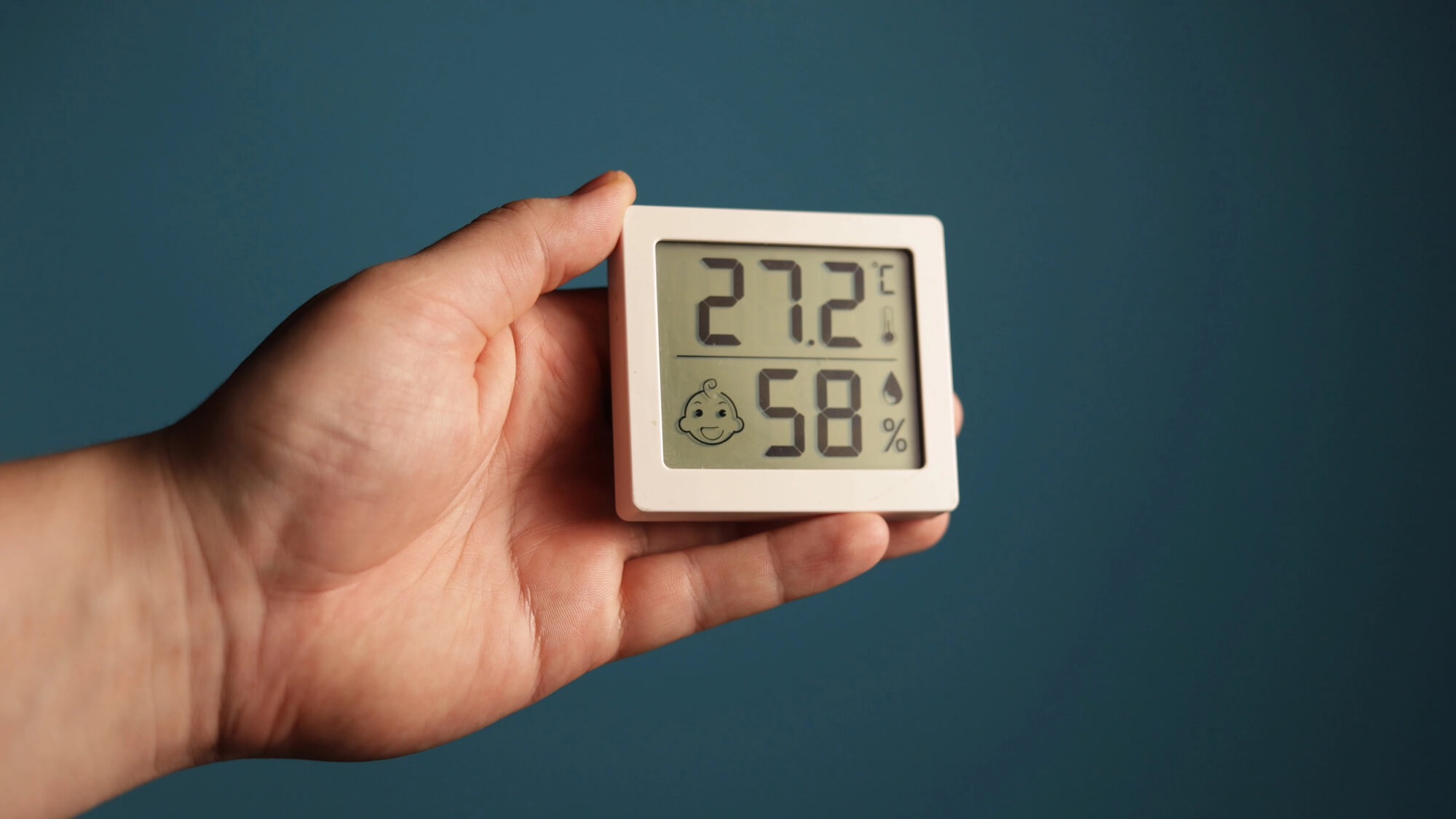
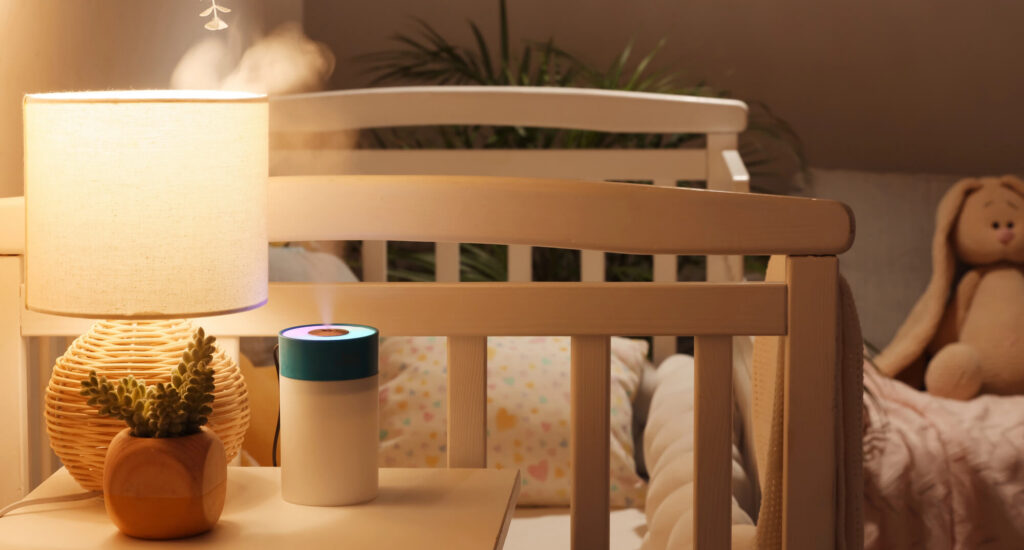
A simple humidity gauge can help you understand what’s happening in the room rather than relying on how the air feels. Depending on your home’s conditions, a humidifier or dehumidifier may sometimes be useful, but neither should be treated as an automatic nursery requirement.
If you discover an ongoing moisture or mold problem, address the source. An air purifier or duct cleaning alone won’t correct the conditions allowing moisture-related problems to develop.
How to Improve Air Quality in Your Baby’s Nursery
You don’t need a nursery full of gadgets to make thoughtful improvements. Focus first on the factors you can control.
1. Reduce Air Pollutants at the Source
Source control is one of the simplest places to start.
- Choose non-toxic paints (VOC-free or low-VOC), non-toxic furniture, and other non-toxic household products when practical.
- Limit heavily fragranced cleaning supplies, candles, plug-ins, and room sprays in the nursery.
- During renovation, contain construction dust and debris as much as possible and protect HVAC registers appropriately.
The less unwanted material introduced into the room, the less your ventilation and filtration systems have to remove later.
2. Ventilate When Outdoor Air Quality Is Good
When weather and outdoor air quality allow, good ventilation strategies can help replace stale indoor air.
Opening windows can provide natural or cross-ventilation in some homes. Mechanical home ventilation may provide controlled air exchange for others.
Before opening windows, consider outdoor conditions. During wildfire smoke, high air pollution, or heavy pollen events, keeping windows closed and relying on appropriate filtration may make more sense.
3. Keep HVAC Filtration Working Properly
Your HVAC system moves air throughout the home, including the nursery.
Keep supply and return registers open and unobstructed by furniture, rugs, curtains, or storage. Change the HVAC air filter according to the filter manufacturer’s and equipment manufacturer’s recommendations.
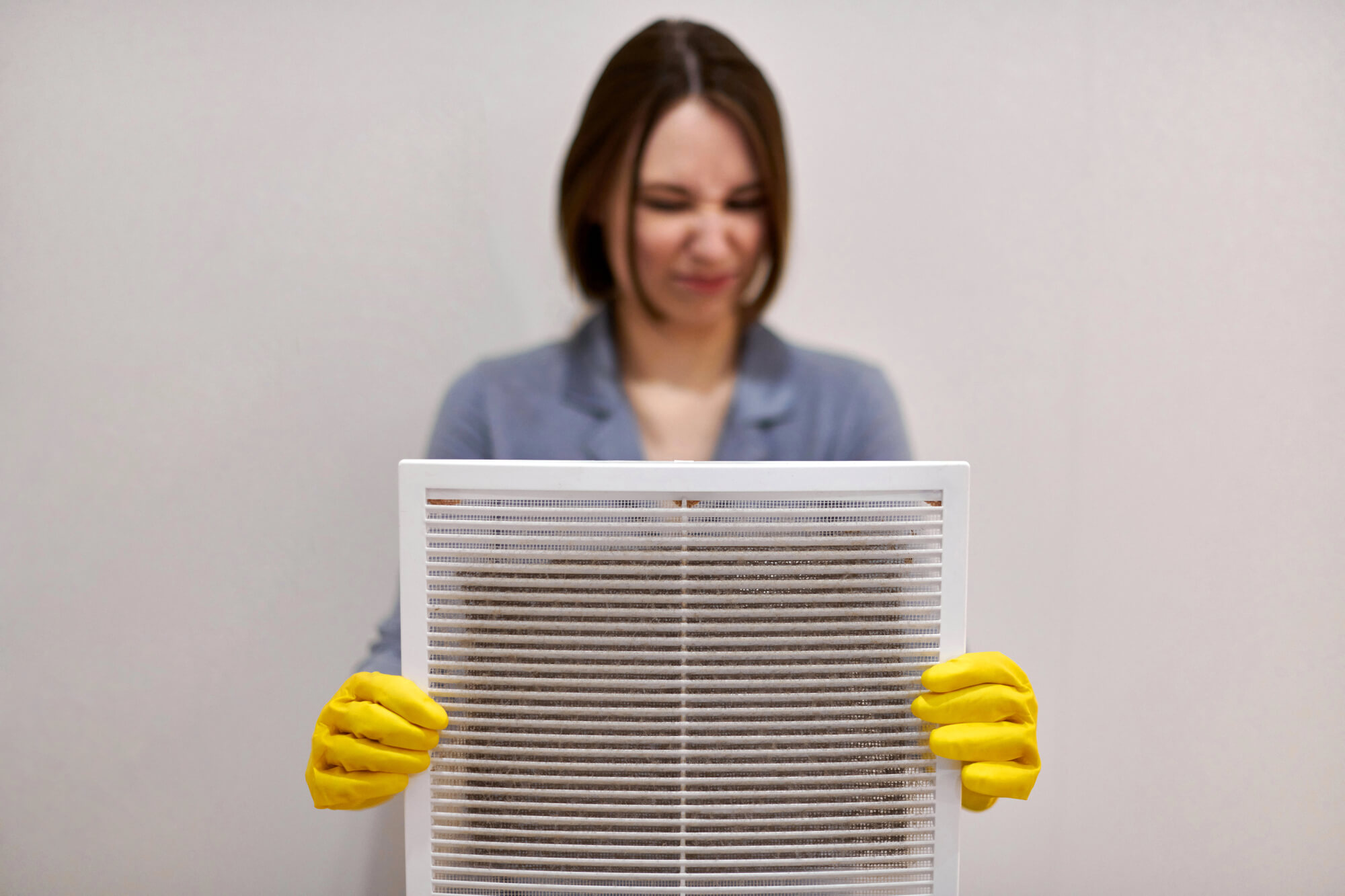
HVAC filter fit matters, too. Air should move through the filter rather than around gaps at its edges.
Higher-efficiency mechanical filters may capture smaller particles, but the right filtration level depends on the HVAC system. A more restrictive filter, like a HEPA filter, isn’t automatically better if the equipment isn’t designed to accommodate it.
4. Consider an Air Purifier When Appropriate
A portable air purifier can provide additional filtration in a nursery when properly selected for the room and intended purpose.
A HEPA (High-Efficiency Particulate Air) filter is designed to capture airborne particles, including PM10 particles like mold spores, dust, and pollen. Some air cleaners also incorporate activated carbon filters intended to address certain gases and odors.
A HEPA air purifier should complement—not replace—source control, appropriate ventilation, moisture management, cleaning, and HVAC maintenance.
5. Clean Without Redistributing Dust
Small changes to your cleaning routine can help keep settled dust from becoming airborne again.
For example:
- Use a damp cloth rather than a dry duster on hard surfaces.
- Vacuum rugs, carpets, and appropriate upholstery with a well-maintained vacuum and suitable filtration.
- Wash bedding and other washable fabrics regularly using products appropriate for your household.
The goal isn’t to eliminate every particle. It’s to prevent unnecessary buildup and remove dust effectively when it settles.
How Your HVAC System Affects Nursery Air Quality
Your nursery doesn’t operate independently from the rest of your home.
The HVAC system circulates conditioned air through supply and return pathways, while the filter captures some particles passing through the system. That’s why keeping filters maintained and registers unobstructed supports the nursery along with every other conditioned room.
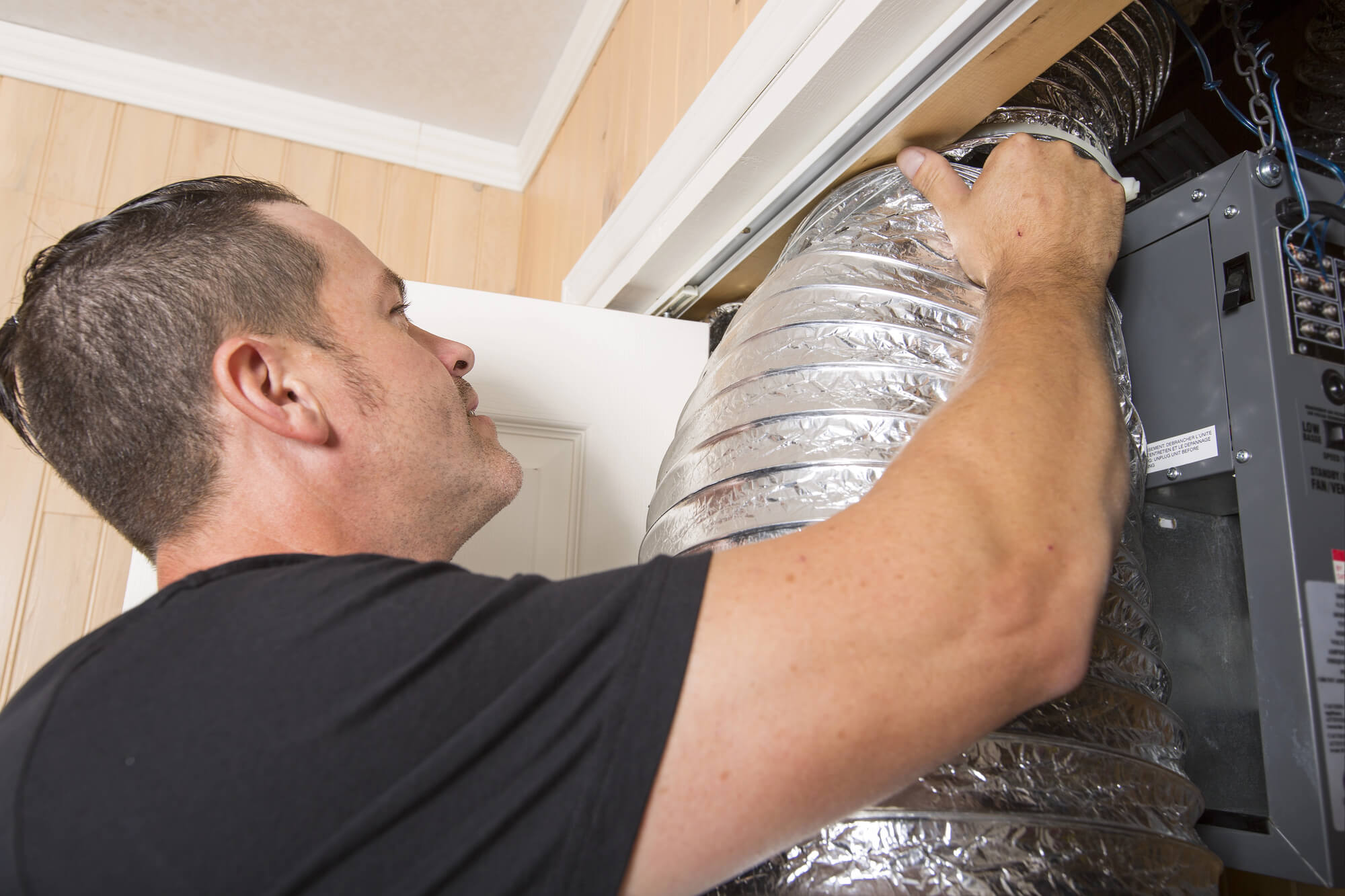
The condition of the ductwork can also matter when substantial dust, debris, or construction material has accumulated inside it.
When Air Duct Cleaning May Be Worth Considering
Having a baby isn’t, by itself, a reason to schedule professional air duct cleaning.
Instead, consider the actual duct conditions.
A professional inspection may be worthwhile if you notice:
- Substantial visible dust or debris inside accessible ductwork
- Material coming from registers
- Construction debris following a renovation
- Another known contamination event affecting the HVAC system
When significant buildup is present, professional duct cleaning can remove accumulated material from areas that ordinary household cleaning cannot reach.
Modern PURAIR® uses professional equipment and a defined cleaning process, with technicians showing customers what was removed from their system.
What To Monitor in a Baby Nursery’s Indoor Air Quality
You don’t need to turn the nursery into an environmental laboratory.
A few simple observations can provide useful information:
- Temperature and relative humidity
- Outdoor AQI, especially during wildfire or pollution events
- Visible moisture or condensation
- Persistent or unusual odors
- Dust or debris around HVAC registers
Some consumer indoor air quality monitors also measure PM2.5 levels, carbon dioxide (CO₂), and carbon monoxide, or other indicators. These readings can provide additional context about indoor conditions, but they shouldn’t be treated as a medical diagnosis.
If you have concerns about your baby’s respiratory health or other symptoms, speak with your pediatrician or another qualified healthcare professional.
When to Get Professional Help With Nursery Air Quality
Different air-quality problems call for different kinds of help.
An HVAC or indoor air quality professional can help investigate filtration, ventilation, airflow, and HVAC or duct concerns. Significant moisture or suspected mold issues may require professionals qualified to identify and address the underlying cause.
Remember: Health concerns or signs of respiratory problems belong with your baby’s healthcare provider, not an HVAC or duct-cleaning company.
For duct cleanliness and broader indoor air quality concerns, Modern PURAIR® can help assess the home’s system and determine whether professional cleaning or another indoor-air service is appropriate.
Give Your Baby’s Nursery a Healthier Air Foundation
Indoor air quality baby nursery planning matters more than many parents realize, especially before a new baby arrives. Infants breathe more air per body weight than adults, and babies are more vulnerable to pollutants due to developing lungs and a still-developing immune system, which is part of why poor indoor air quality in a small space like a nursery can have a bigger impact than the same conditions would in a larger room.
Your baby’s nursery doesn’t need to be a perfectly controlled bubble. Focus on the things you can reasonably manage:
- Choose lower-emission products, including low voc paint on the walls and furniture
- Limit smoke and unnecessary fragrances, avoiding smoking and vaping near the nursery, air fresheners, and scented candles in or near baby’s room
- Ventilate when outdoor conditions are appropriate, bringing in more air and fresh air to help dilute indoor pollutants
- Control moisture and humidity to help prevent sinus congestion and other health effects tied to poor air quality
- Filter airborne particles and reduce pet dander, especially important for young children and infants alike
- Clean regularly, using natural cleaning products and mild, fragrance-free detergents to avoid introducing harmful volatile organic compounds, and consider damp dusting to reduce airborne dust and allergens along with regularly washing crib sheets in hot water to kill dust mites
- Maintain the HVAC system
Invisible gases are worth understanding too, not just what you can smell. Radon is the second leading cause of lung cancer in the U.S., according to the Environmental Protection Agency, and it’s the kind of risk that doesn’t announce itself with an odor the way cleaning products or smoke might. Infants are more vulnerable to indoor air pollutants than adults generally, including sensitive groups such as older children and healthy adults with existing respiratory conditions, since exposure at higher doses over time indoors carries an increased risk regardless of age, and children in particular tend to spend more time indoors during early infancy before outdoor activity and outdoor time become a bigger part of daily life.
If inspection shows that accumulated material inside your air ducts is part of the problem, Modern PURAIR® can provide professional cleaning with trained technicians, professional equipment, and a clear process to help improve indoor air quality throughout indoor environments like the nursery and the rest of the home.
The goal is simple: create a nursery where thoughtful choices about the things you can’t see support all the care you’ve already put into the things you can.